There are something like a hundred châteaux within an hour of the estate, depending on what you count. The Dordogne carries this density of medieval and Renaissance architecture the way other regions carry vineyards or coastline — without much fanfare, because for the people who live here it's just the landscape. After a few seasons of taking guests around, four have settled out as the ones we recommend, and each for an entirely different reason.
One you can't enter. One that's a glorified playground for children. One worth the dégustation downstairs as much as the building above. One commanding the southern hills, paired with the bastide that sits six kilometres from its gate. Different sizes, different styles, different uses of half a day.
The piece below is honest about what each one offers. Not all of them need an interior visit, and the article says so where that's true.
I · BannesThe one you can't enter.
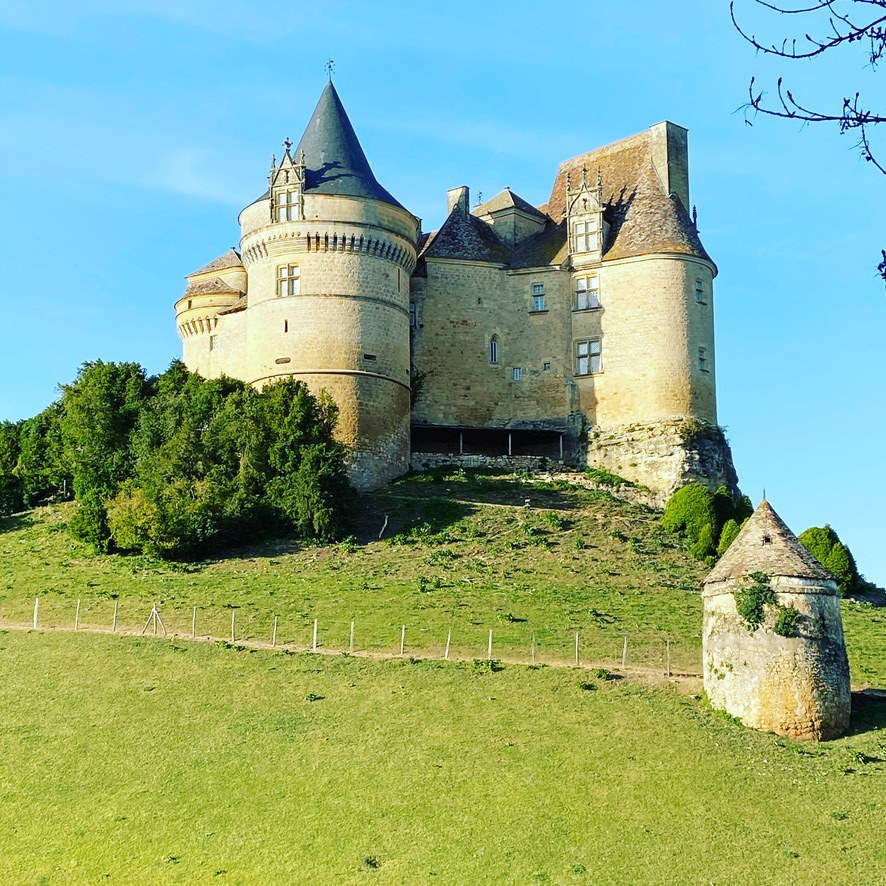
Bannes is the château most guests recognise without knowing the name. Five round towers with conical slate roofs, a drawbridge over a dry moat, perched on a rocky outcrop above the Couze valley — the archetype English-speakers carry in their heads when they think of a French castle. They photograph it from the D660 and drive on.
It's privately owned, beautifully maintained, and not open to the public. The current owner is the founder of a French equipment-rental empire; the rooms inside are by all accounts spectacular and inaccessible. There's a single exception each year, during the regional Châteaux en Fête programme, when the exterior and gardens open by lantern light for guided evening visits — on reservation only, places limited, well worth the booking effort if your stay falls in the right week.
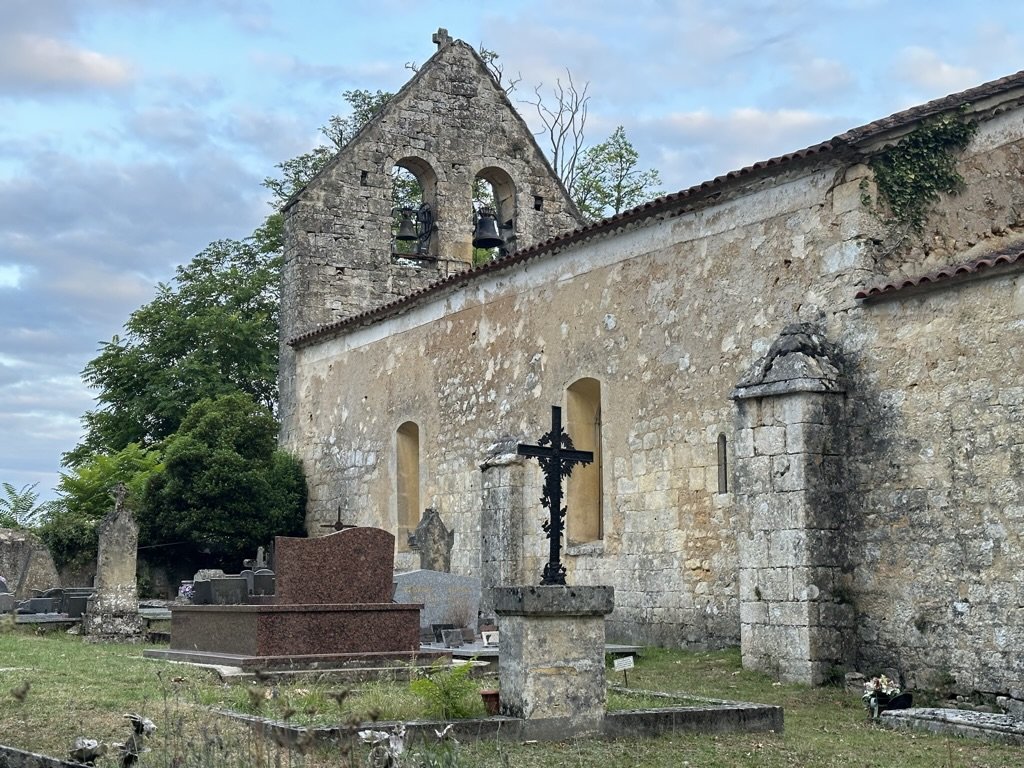
The trick, the rest of the year, is to leave the road. Follow the lane that bends around the château, and at a fork marked très raide — very steep — climb the small track up to the parish church of Saint-Martin. The site has been sacred since the sixth century, when, according to local legend, Saint Avit founded a chapel here. The current building is twelfth-century, simple, Romanesque, with a single bell from 1746 in a wall belfry. Around the church is an earthwork platform that dominates the Couze valley for kilometres in either direction.
From the platform, Bannes itself sits across from you in profile. Five towers, dark slate cones, catching the early light. We've taken a thermos and a baguette up there at sunrise. It's not signposted as a viewpoint — it's a parish church on a hill that happens to look at one of the most photographed castles in the Périgord from exactly the right angle.
Ten minutes from the estate. Outside only. Combine with a walk down through Bayac for breakfast.
II · BridoireLocal Disneyland.
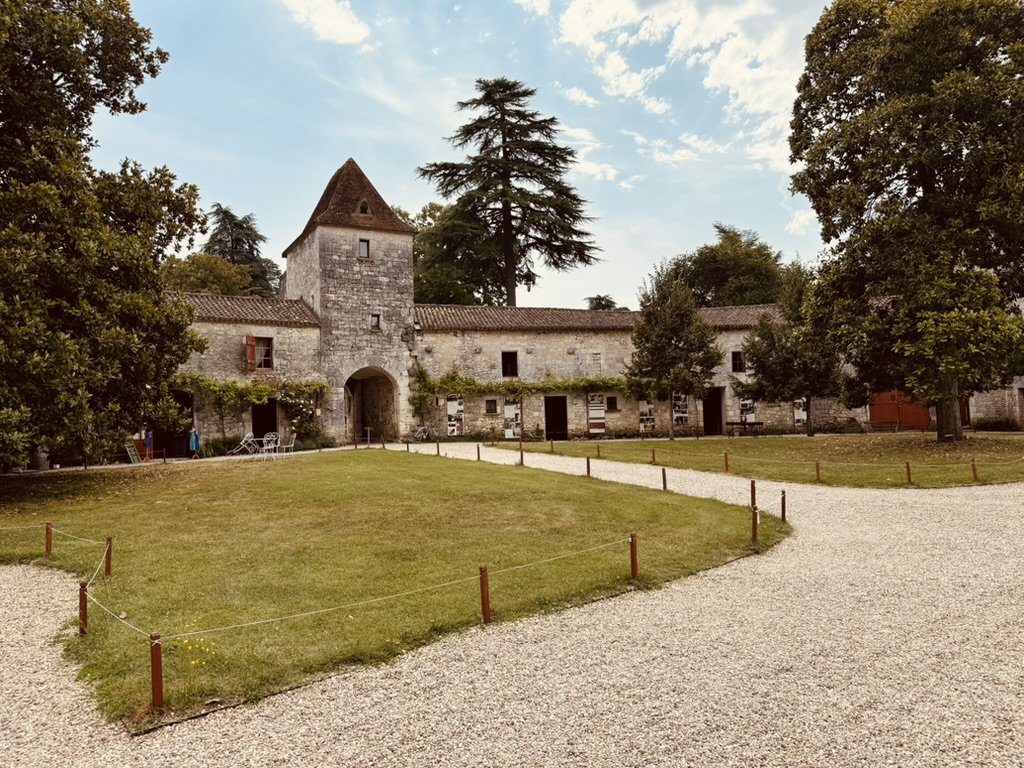
Twenty minutes west, through the Monbazillac vineyards, a 12th-century château that most guidebooks don't mention. Architecturally, Bridoire is fine — but it isn't a big château by any standard, and serious castle visitors will find better elsewhere. What Bridoire does, and does well, is something else entirely: it has reinvented itself as a kid's experience inside a small medieval shell. Local Disneyland, with reenactments, a playground, and a café.
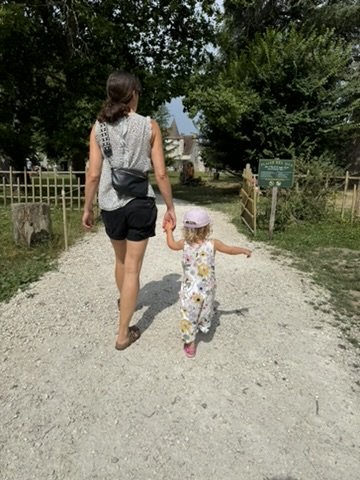
The owners decided, some years back, that the most interesting thing to do with their 12th-century château was to make it a place children actually interact with rather than a place they look at from behind ropes. The great hall has giant chess and checkers set up on the stone floor, and you play. The courtyard has archery, and you shoot. Cloth sacks are piled near the stable yard, and you run sack races with whichever other family is there. Medieval reenactments run through the summer — knights in armour, longbow demonstrations, crafts.
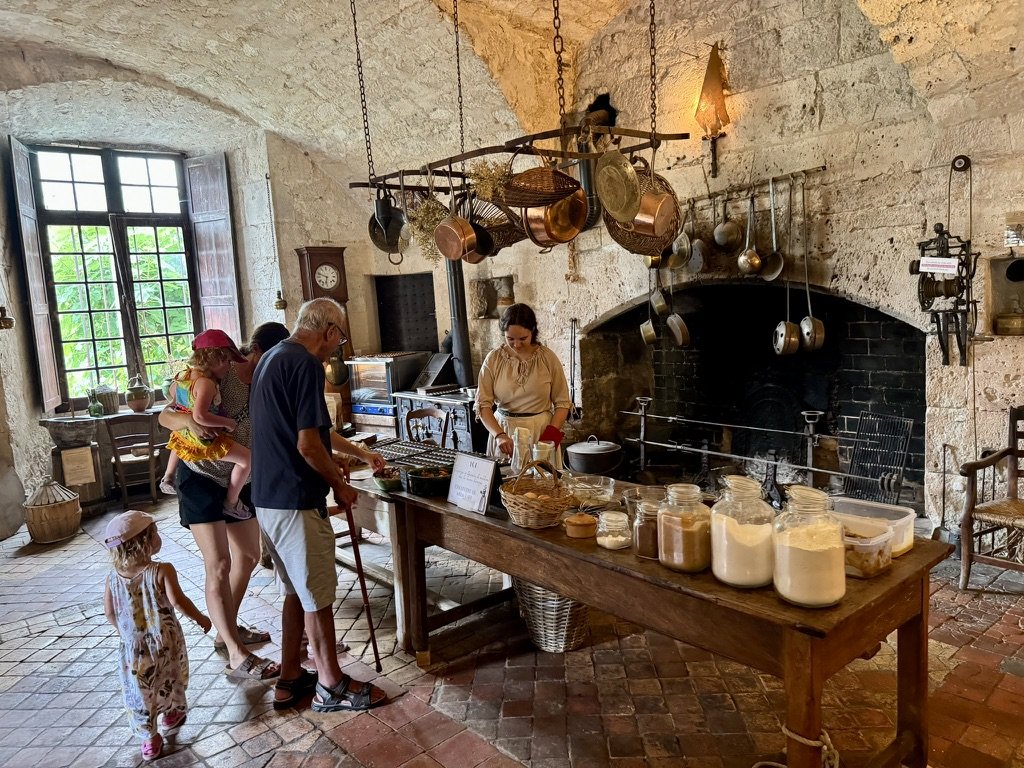
The labyrinth in the grounds is the second draw, and the more memorable one. Larger than you'd expect, no easy shortcut, walls tall enough you can't cheat. We've watched families argue their way through it in three languages and emerge laughing. Every time.
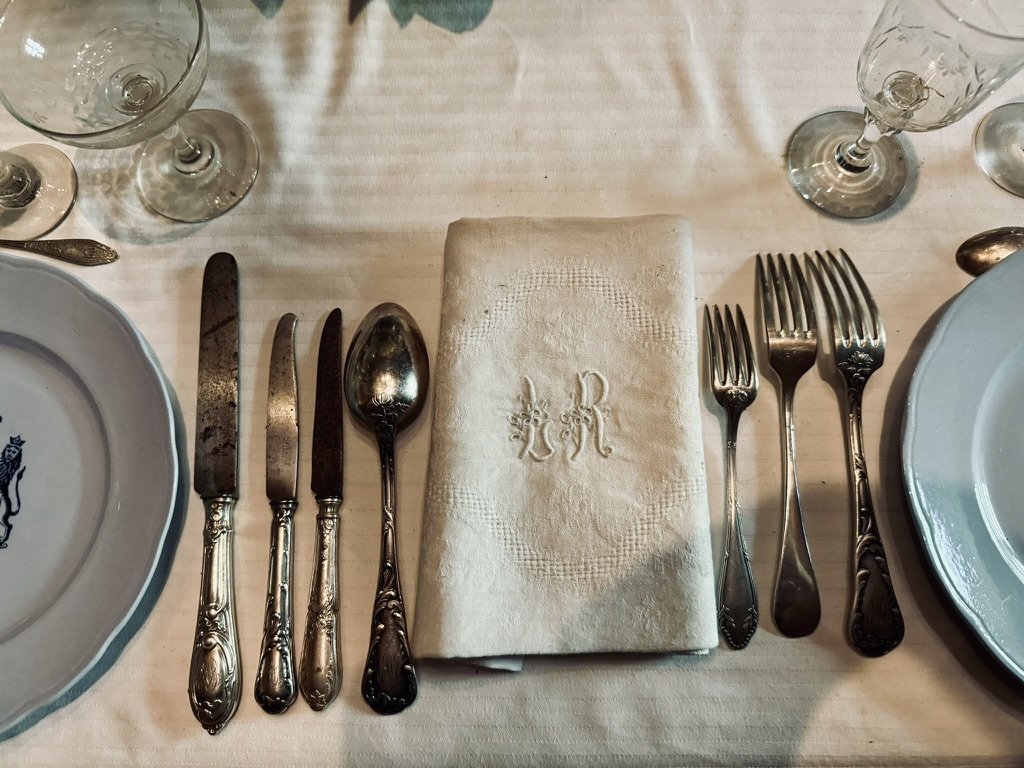
We send families here. We don't send couples. If you're travelling with anyone between four and fourteen, it's a half-day that pays back. If you're not, skip it.
III · MonbazillacThe one worth going inside.
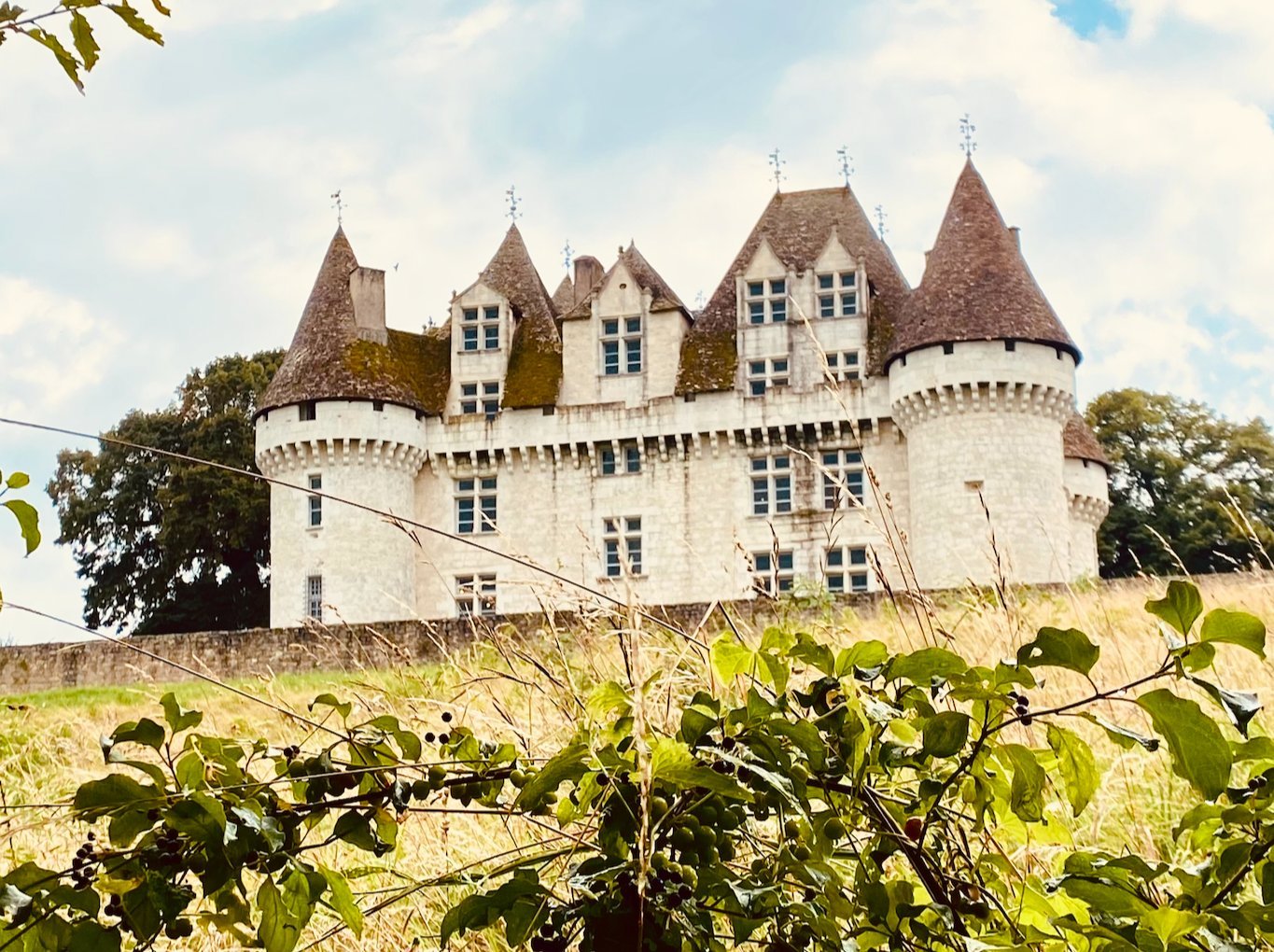
Half an hour west, the road climbs through the Monbazillac vineyards and arrives at one of the most photographed buildings in the Bergerac. The château sits high on the ridge above the river — golden stone, four corner towers, a Renaissance-defensive hybrid built in the 1550s when noble houses still wanted the silhouette of a fortress even as they were furnishing the rooms for comfort.
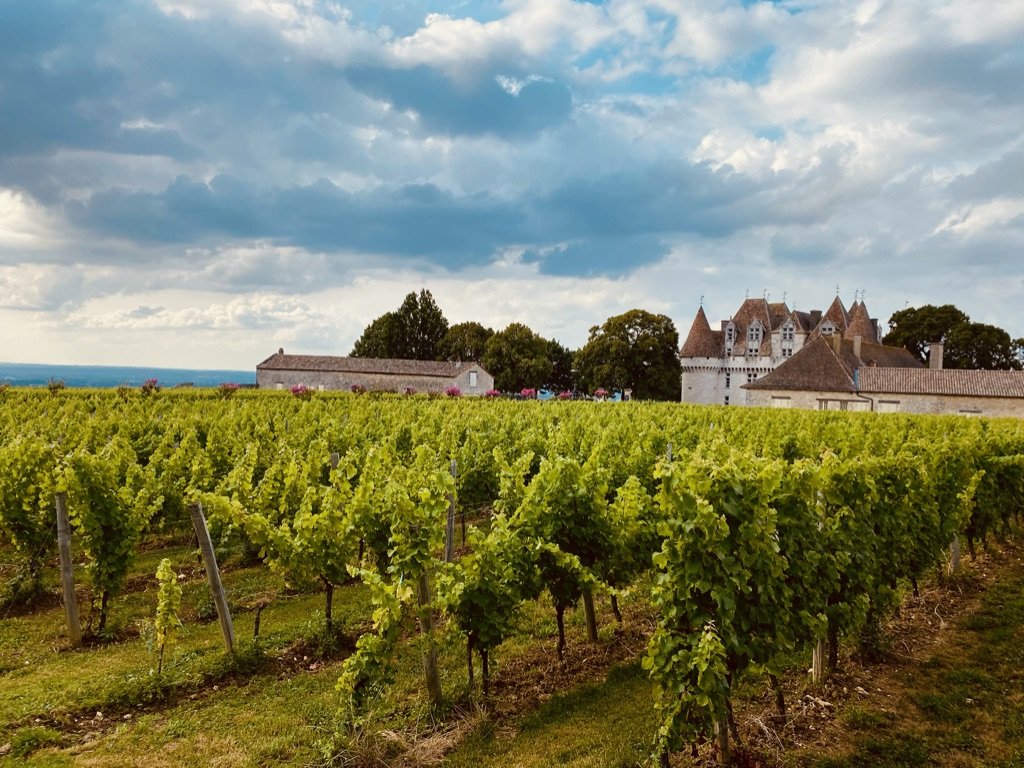
This is the exception in the four — the one where going inside is genuinely worth it. The shape of the visit is: walk the exterior first, take the time to appreciate the position from every side, then do the interior tour, then end with the dégustation in the cellar. The whole thing takes about two hours and is paced exactly right.
The terrace view is the moment the visit lands. Looking northwest across the Dordogne valley with Bergerac spread below you, vineyards filling the foreground, the river silver in good weather. There aren't many views in this part of France that justify the word panorama as completely as this one does. The amount of countryside visible from a single spot — and the fact that you can stand there with a glass of Monbazillac in hand — is a real reason to go.
The dégustation downstairs covers the sweet wine that gives the village its name. We won't go into the wine itself here — it deserves a full article, and gets one. For now: it's one of the great underrated dessert wines of France, the village is ten kilometres from the estate, and tasting it where it's grown is exactly the right way to be introduced to it.
Half-day. Tour and tasting included. Lunch in Bergerac afterwards if the weather is good — the old town is fifteen minutes down the hill.
IV · Biron and MonpazierThe half-day east.
The fourth is the longest day of the four, and the one that takes the most committing to. Biron is roughly forty minutes south, on the border between the Dordogne and the Lot-et-Garonne, and it's substantial in a way the other three aren't. Classified as one of the four great baronies of Périgord — alongside Beynac, Bourdeilles, and Mareuil — it was held by the Gontaut-Biron family for twenty-four generations before being sold to the state in 1978. The same family, incidentally, rebuilt Bannes from 1510 onwards. Two of the four châteaux in this article are connected by a single noble line that ran for the better part of a millennium.
What you notice first about Biron is its commanding position. It's visible for miles in every direction — coming up the road from the south, or crossing the hills from Monpazier, the silhouette appears and disappears across the landscape long before you reach the gate. It's a good introduction to the Hundred Years' War for anyone in the family who hasn't been steeped in the period — the building has been continuously fortified, attacked, transformed, and re-defended from the 12th century to the 18th, and the layers are visible in the stonework.
The sister stop is six kilometres away. Monpazier is one of the most intact 13th-century bastides in France, and one of the prettiest. It rewards anyone who likes architecture and paving details — the geometry of the streets, the arcaded central square (the Place des Cornières), the way the stone has been cut and laid and worn. There are small shops and cafés around the square, and lunch under the arcades on a summer day is the exact thing you came to the Dordogne to do.
The shape of the day is to do Biron first, before the heat — the approach across the hills is the half of the experience — and then drive over to Monpazier for lunch and the bastide wander. Home by mid-afternoon if you start early.
Forty minutes south. The half-day east. The fullest of the four, and the only one where two stops genuinely belong together.
A note on directionMostly from outside.
Three of the four châteaux above reward time outside the building more than inside. Bannes you can't enter at all, and the better view is from a 12th-century parish church on a hilltop opposite. Bridoire is small and the architecture isn't the point. Biron is most striking on the approach — coming over the rise, seeing the silhouette before you reach the gate.
Monbazillac is the one where the building, the tour, and the dégustation are all worth it. If you've only got time for one châteaux visit during your stay, that's the one we'd send you to.
For the other three, the recommendation is the same as it is for most châteaux in the Périgord: walk the grounds, eat the picnic, take the photograph, and leave the rooms to the people who measure a visit by the number of plaques they've read.