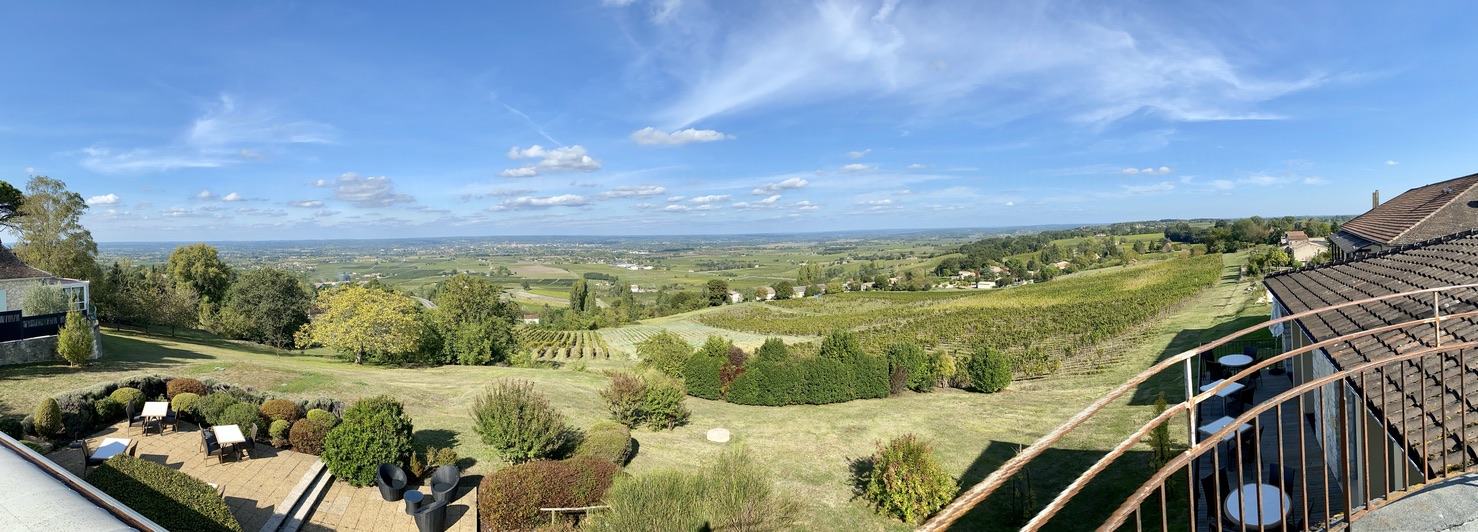
Driving the back roads of the Périgord Pourpre, you wouldn't know any of this was here.
The roads are quiet. Empty in long stretches. Vineyards on one shoulder, oak forest on the other. A village of three hundred people. Another village of seven hundred. No high street. No restaurant district. No signage to speak of. After half an hour you've crossed two bastide squares and a UNESCO abbey, passed a dozen unmarked stone houses, and you wouldn't know that any one of them might be a starred kitchen unless you'd been told.
The serious cooking in this part of France is the way the truffles are: under the leaf-litter, on the inside of a forest you don't learn in an afternoon. You have to be told. Or you have to stop at the right village by accident. Or you have to live here a while and pay attention, the way a truffle hunter slowly learns which oaks are productive and which aren't.
We didn't know any of this when we bought the estate. We bought five seventeenth-century stone houses and a forty-kilowatt solar field and the sort of view down a forested valley that, if you happen to be standing in it for the first time, makes you reach for the chequebook before you've thought it through. We assumed the dinners would be — fine. Probably good. Probably duck.
What we've come to understand is that none of these kitchens are trying to be Bordeaux. None of them are reaching for cosmopolitan polish. They sit in stone houses on side roads, behind unmarked doors, on abbey squares and back terraces, at the top of vineyards beside old windmills, and they cook what grows around them. It's not Paris. It's not a busy bistro in Bordeaux. That's its charm.
Six destinations, all within thirty minutes of our front door. The drive is part of the meal: leave early, take the back way over the hills, stop somewhere on the road, don't rush. You want to arrive at the table already in the right state. These places are quiet enough that fluster doesn't belong.
I · TrémolatLe Vieux Logis.
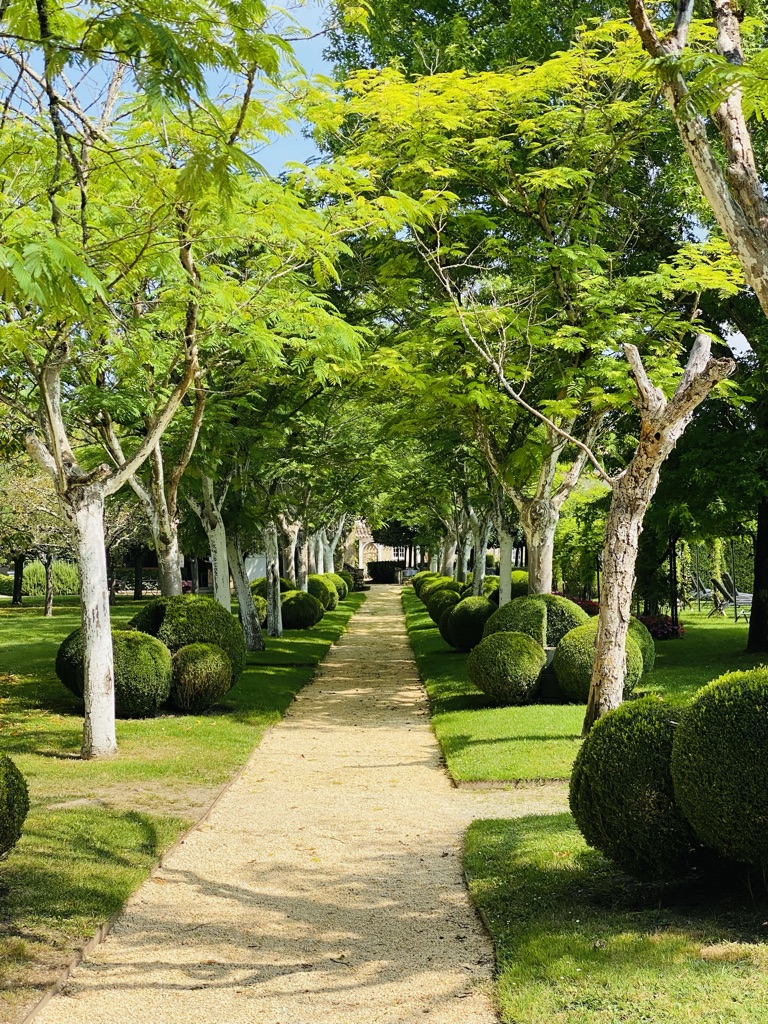
Trémolat sits inside a famous bend of the Dordogne — the Cingle de Trémolat — and Le Vieux Logis sits inside the village, a sixteenth-century former priory turned Relais & Châteaux. The dining room is a converted tobacco-drying barn: stone, painted wood, lime trees through the window in summer, a Nontron knife on the table at every place setting that you keep for the whole meal.
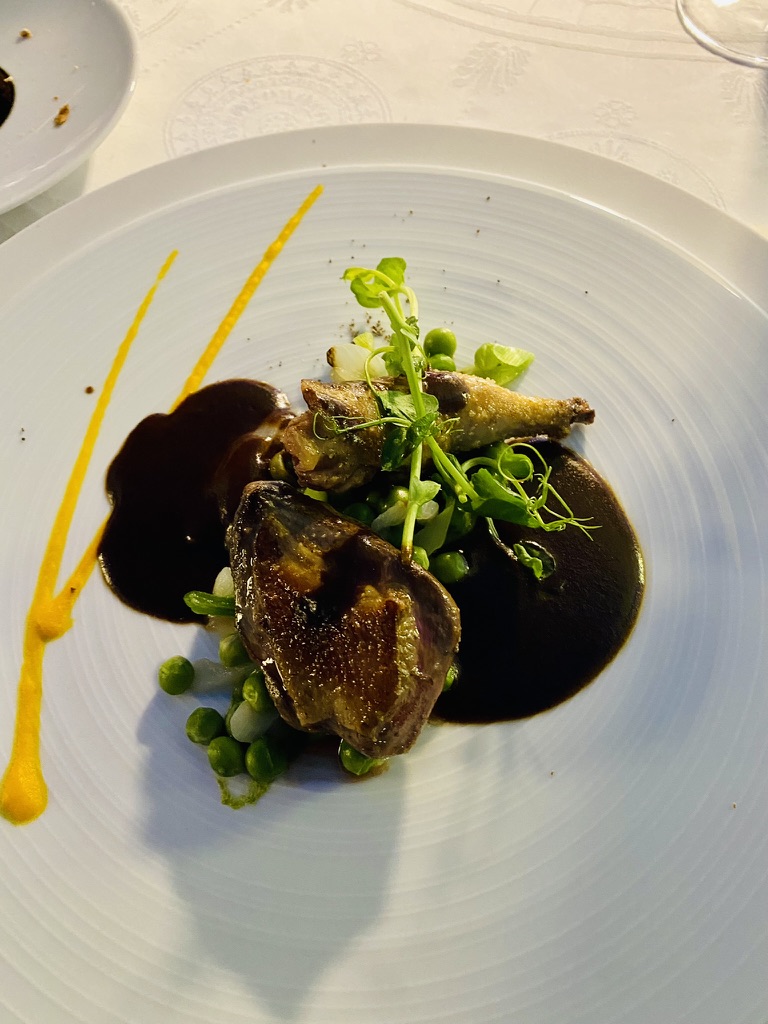
The chef is Vincent Arnould, Meilleur Ouvrier de France. The dish to order is the écrevisses — the white-clawed freshwater crayfish, a protected native species, taken from the river that bends around the village two hundred metres from the kitchen door. It only lives in clean water, which is part of why ordering it feels like the most Périgord act it is possible to perform with a knife and fork. Pair it with a Bergerac white from a vineyard ten kilometres up the hill.
Practical. Twenty-five minutes from the estate but the drive matters: take the hill route over the coteaux if it's daylight — the views open out as you climb. Or take the more direct way; it's also beautiful, just differently. Either route, leave early. Stop on the way. Don't rush. The lunch menu éphémère is sixty euros and reasonable. Closed Wednesday and Thursday.
II · MonbazillacLa Tour des Vents.
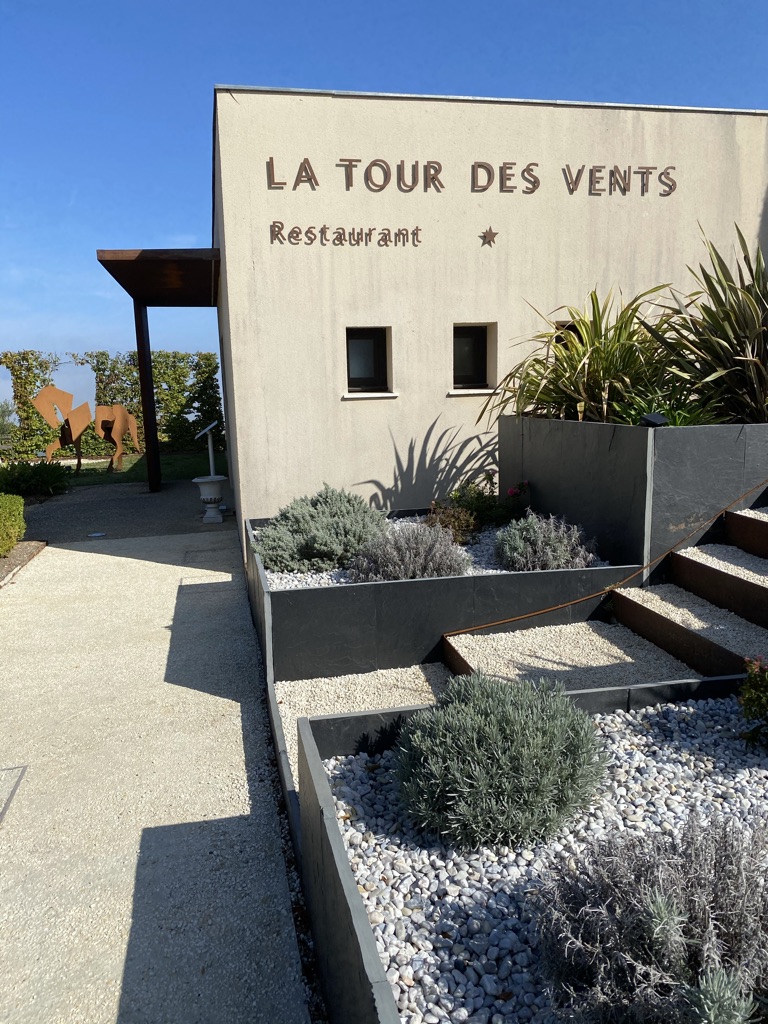
Climb the coteaux of Monbazillac through the vineyards and at the highest point you reach an old stone windmill, the Moulin de Malfourat. Beside it is La Tour des Vents. The terrace looks down over the entire Bergerac valley, the swallows do their work above the vines, and the sun goes behind the cliffs on the other side of the river around eight in late summer.
The chef is Damien Fagette. He started here as an apprentice and earned the Michelin star in his own right without ever leaving the kitchen — the rare loyalty career arc. The cooking is precise; the desserts arrive looking like fine art from a Parisian museum, plated in careful geometry, glazes catching the light, little towers of mousse and tuile and gold leaf you almost don't want to disturb.
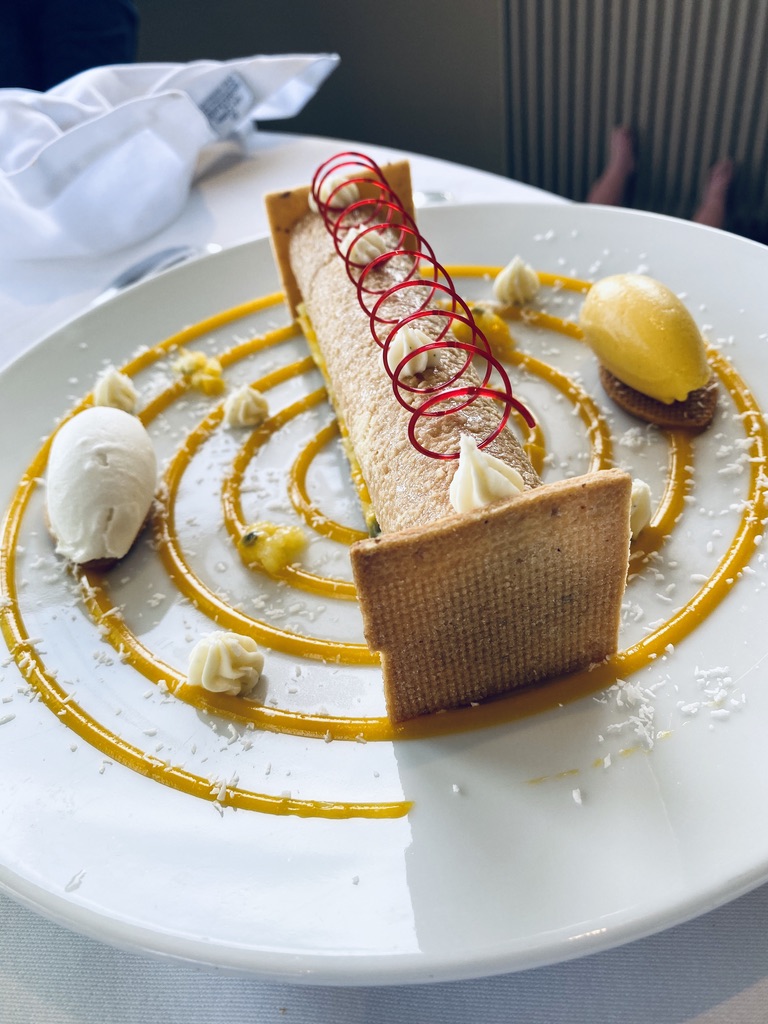
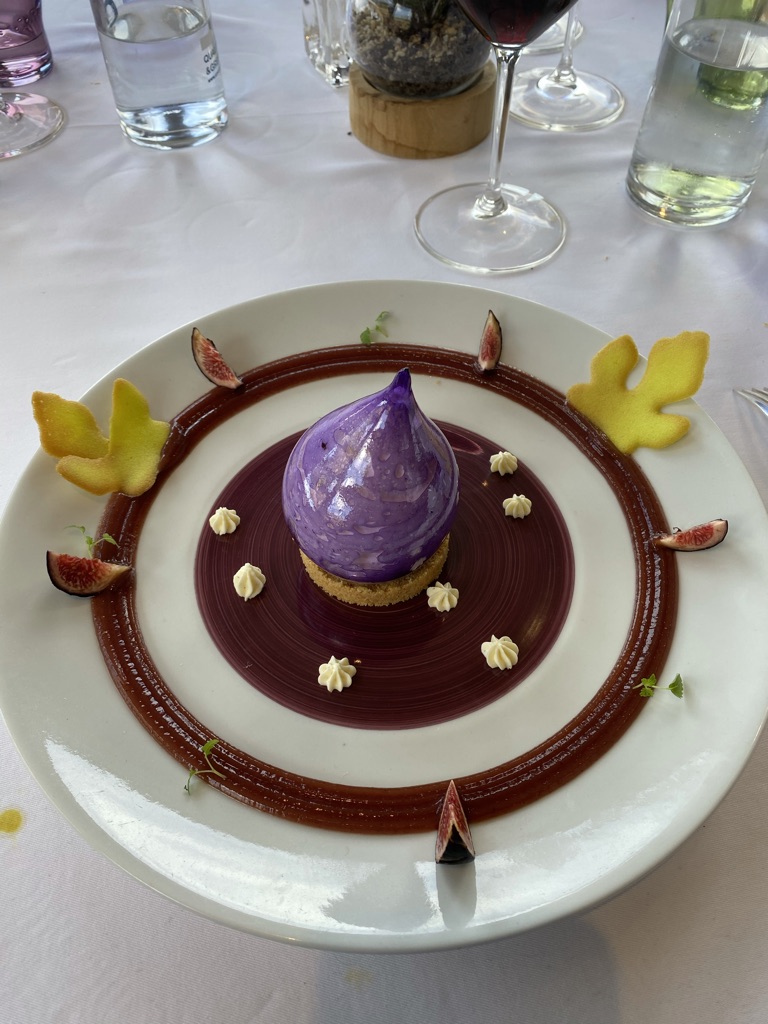
The moment we won't forget happened with our baby. We brought a small jar of baby food to the table, the way you do, and the kitchen took it, warmed it through, and sent it back to us in their own beautiful ceramic bowl so our daughter could eat properly alongside us.
A Michelin-starred kitchen on a hilltop windmill, warming a baby's lunch and plating it like a baby deserved a plate. That's the moment that tells you what this restaurant is.
Practical. There is a dress code and they enforce it: no shorts, no caps, no sportswear. Turn up in linen and a clean shirt. The seven-course Menu Découverte is one hundred and ten euros, wine pairing fifty-three to fifty-nine more. Closed Sunday evening, Monday, Tuesday.
III · Saint-NexansLa Chartreuse du Bignac.
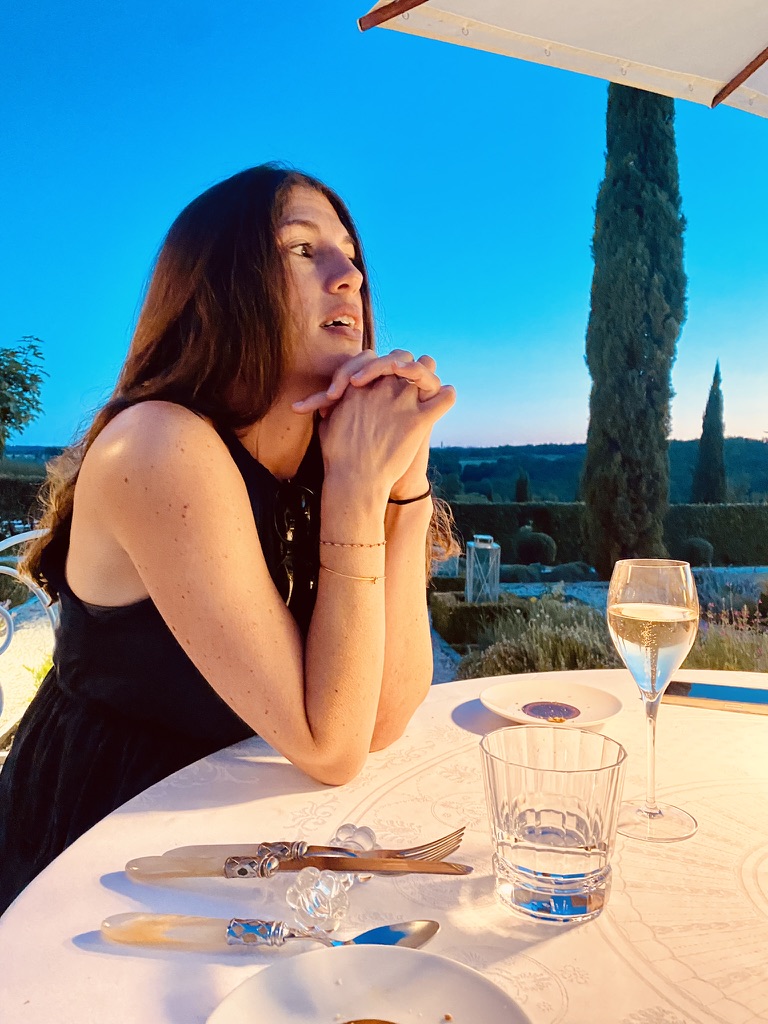
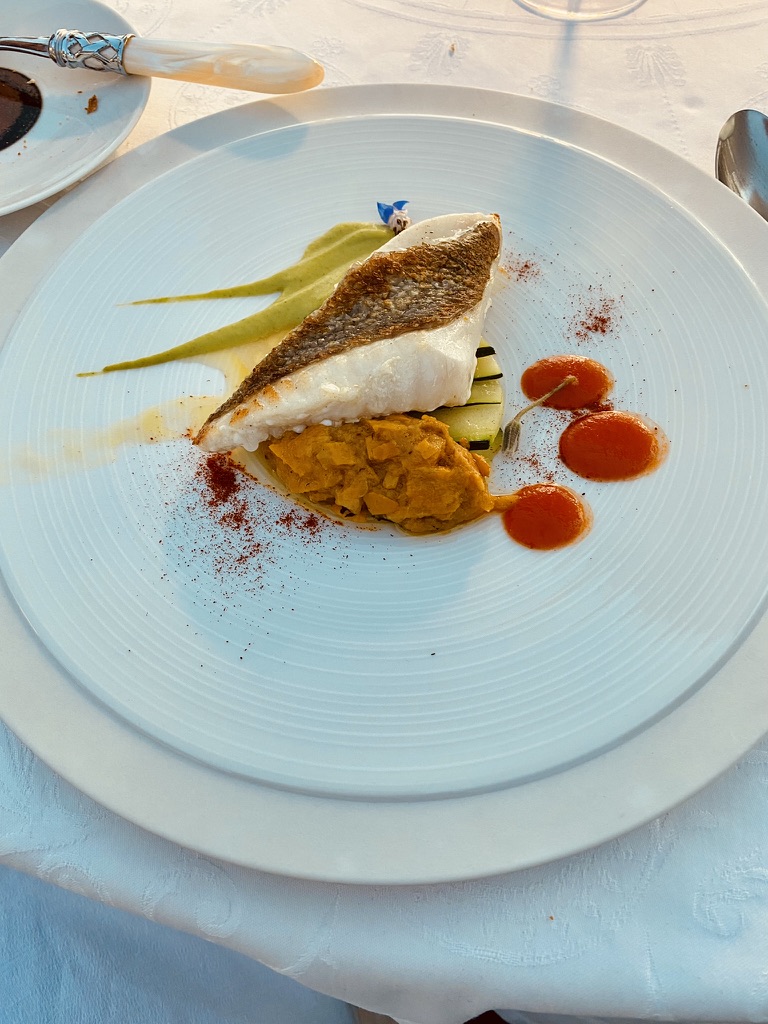
A seventeenth-century chartreuse on a hilltop between Bergerac and Issigeac, with three hundred and sixty degrees of view over the surrounding countryside. The chef is Jean Twari. The cooking is producer-named in a way you don't see often — the menu calls out the farms by name, the walnut butter from the mill, the Parmesan from the maker, the guinea fowl from the farm down the road. Reading the dish description takes longer than reading the dish itself, which is the point.
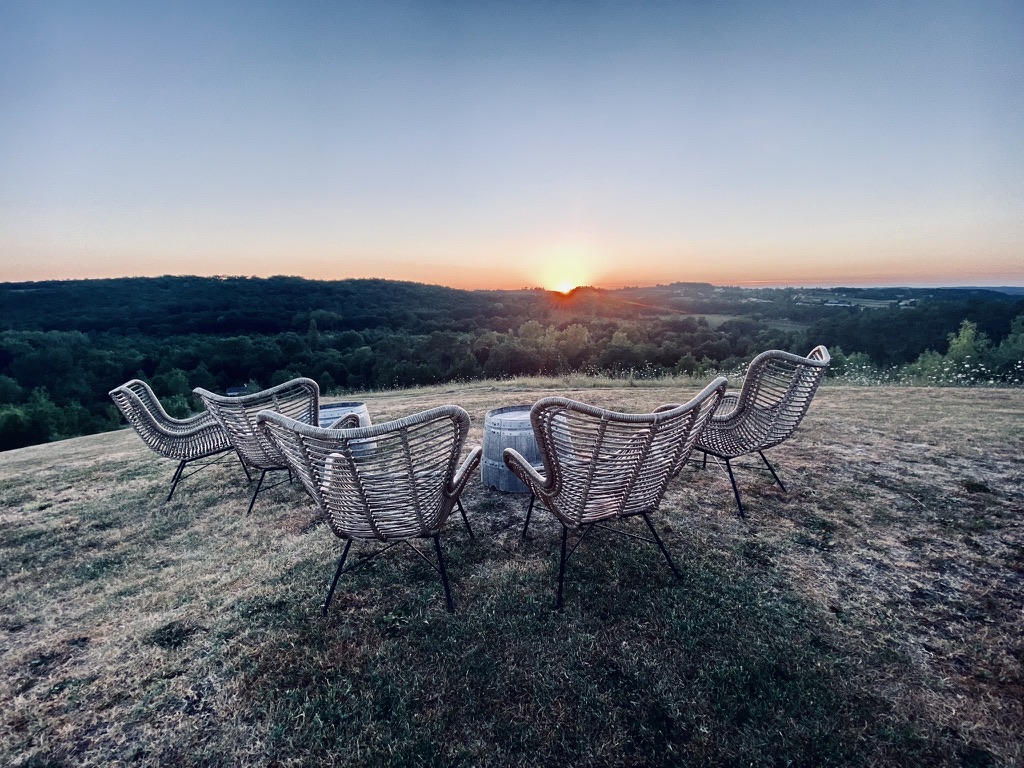
The thing to know about Bignac is the sunset. Go before the sun goes down. They set chairs out beyond the pool, under umbrellas, beautifully lit, looking west over the valley as the light drops. It's a hilltop position so pick the right month — a windy evening in shoulder season can spoil it; in the right month it's lovely. Ask them when you book. They'll tell you the best way to do it.
La Table de Léo.
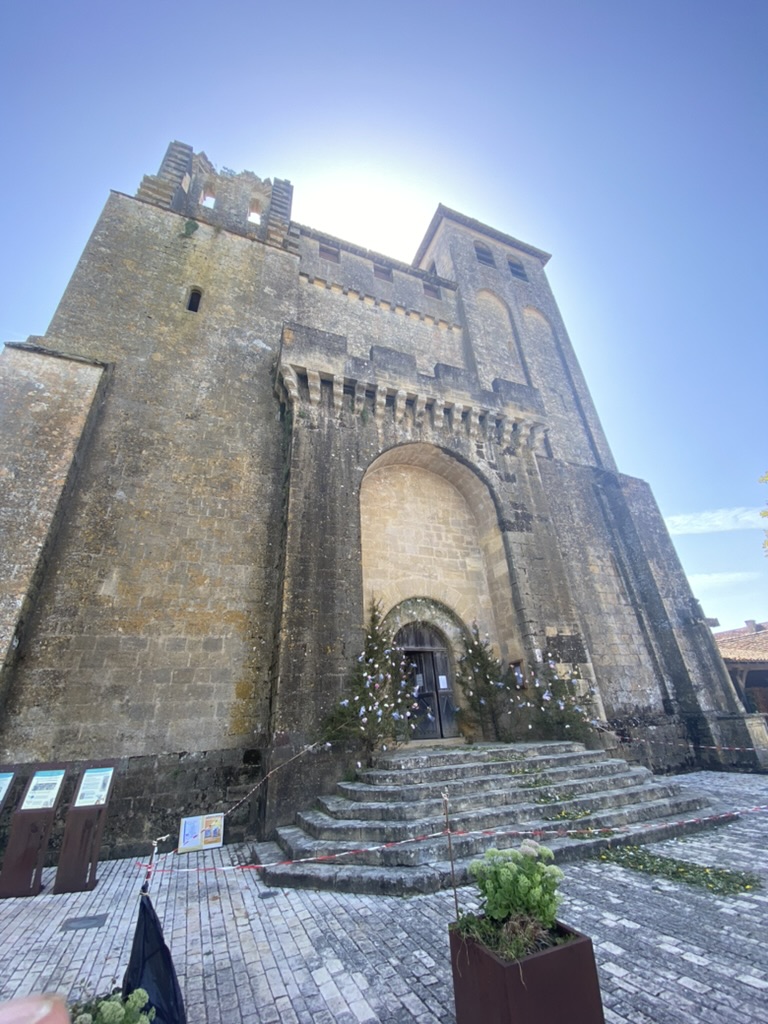
Drive up to Saint-Avit-Sénieur expecting nothing in particular and you find a small, quiet, stunning village on a hill, dominated by a fortified twelfth-century abbey. Tucked into one of the stone houses on the abbey square is a thirty-cover restaurant. If you didn't know it was there, you wouldn't imagine it was there. Another truffle in the forest.
At night the abbey is beautifully lit. You eat on the terrace under twelfth-century walls, in a village asleep around you, and the cooking is alive even though everything else is medieval and quiet. The chefs are Florent and Servane Reversat. The Bib Gourmand has been theirs for six years running. Closed Monday and Wednesday.
V · IssigeacL'Atelier.
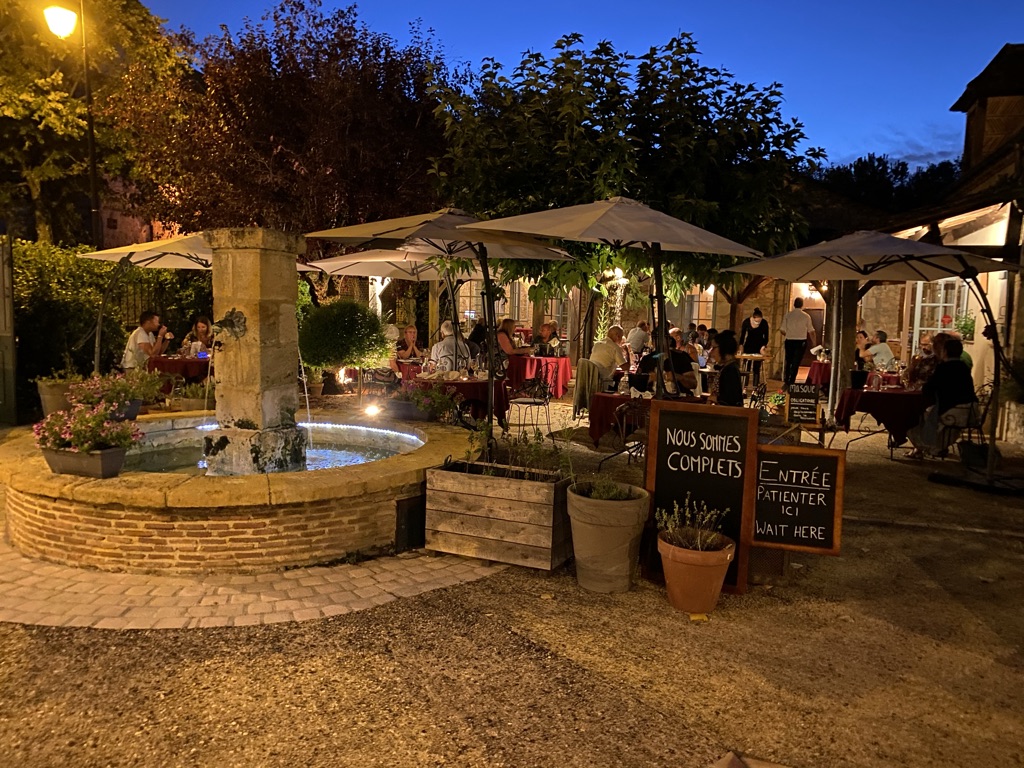
Issigeac is the medieval village ten minutes from the estate — our anchor town, our Sunday market town. L'Atelier sits on the rue Tour de Ville in a stone house with tomettes, the old hexagonal terracotta floor tiles. In winter, eat inside: it's a beautiful day spent at the table, the room warm against the stone. In summer, you must sit outside by the fountain. Kir Royale on the terrace as you sit down. There is a stone fountain on the back terrace that I have been threatening to buy for several years — a running joke with my wife that has earned its place.
The chef is Fabrice Rodot. His wife Victoria — English, raised in Trémolat — runs front of house. The Bib Gourmand was awarded in 2025.
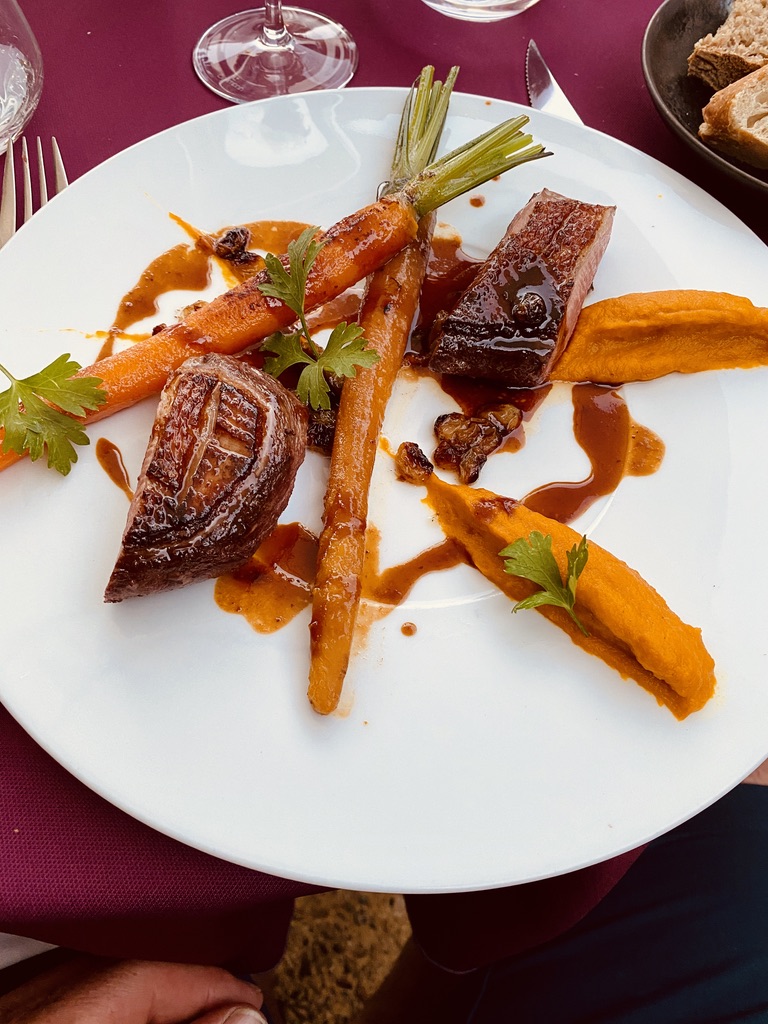
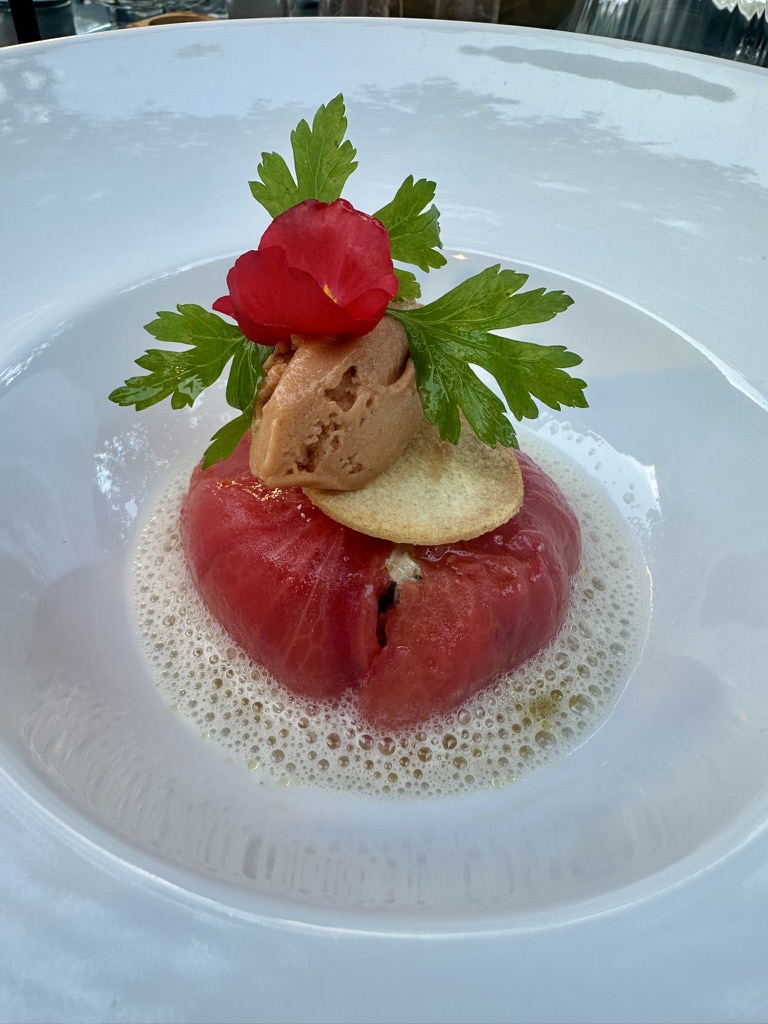
The Easter lunch is the meal we won't forget. Fabrice served the foie gras in half-eggshells, like Easter chicks, the kind of careful, playful, entirely French presentation that lifts a meal out of memory. The desserts came out looking like fine art. We have eaten at L'Atelier two or three times a year for several years now, lunch and dinner both, and there hasn't been a meal that wasn't exceptional. Closed Sunday and Monday.
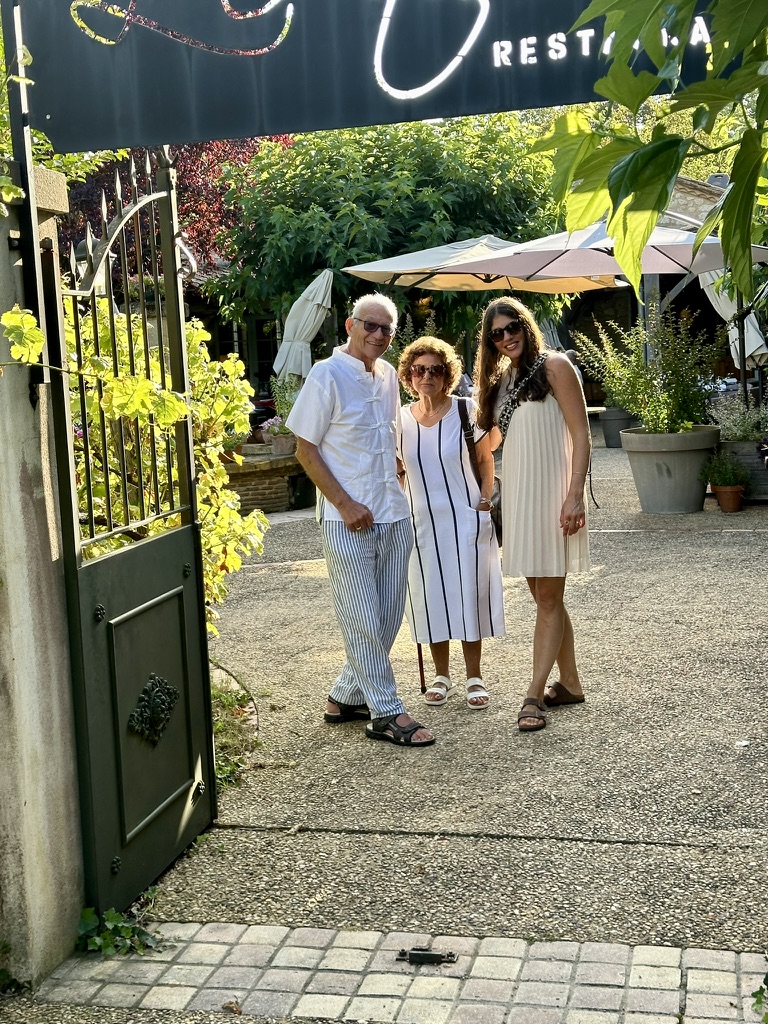
Étincelles · La Gentilhommière.
Sainte-Sabine-Born is a tiny village. A handful of stone houses in deep countryside. If you didn't know it was there, you wouldn't ever imagine it was there. Another truffle in the forest — the second time the metaphor comes up properly on this list, which tells you something.
What you find when you arrive is a beautiful, small, old French home with extraordinary cooking inside it. The chef is Vincent Lucas; Anne runs the room — the website calls her l'étincelle, the spark herself, which earns the restaurant's name. The combination of beautiful old French house, extraordinary cuisine, and a village nobody's ever heard of is the whole thing. I don't think it gets much better than that.
It's not Paris. It's not a busy bistro in Bordeaux. That's its charm as well.
We eat there often. It's twelve minutes from our front door.
VII · One thing more, and it's strangeThe names keep coming up.
After a while, you notice that the same names keep coming up. Not on the menu — but in the kitchens.
The way it works is roughly three-layered, once you start looking. There's the anchor kitchen — Le Vieux Logis, twenty years of one Meilleur Ouvrier de France, the priory in the bend of the river. There's the controlled expansion: the same ownership reaching across to La Tour des Vents on the windmill at Monbazillac, the chef there raised internally rather than recruited. And then there's the distributed network — chefs who trained at the priory and went on to do their own thing in their own villages. Fabrice Rodot at L'Atelier. Florent Reversat at La Table de Léo. Jean Twari at Bignac. Three of the six. Plus a few like Vincent Lucas at Étincelles who sit outside the lineage entirely, doing their own work in their own way.
We didn't notice it for a long time. Then one evening, over the cheese course at L'Atelier, Victoria mentioned that Fabrice had cooked at Le Vieux Logis before opening their place. A few months later, reading about La Table de Léo on the way home from a meal, the same line. By the time we made the connection at Bignac, the pattern had already drawn itself.
We didn't buy the estate for the food. We assumed the dinners would be fine, probably duck. We've come to think the constellation is part of the reason we keep being able to put a Michelin meal in front of guests on a Friday night and a beach pizza in front of their children on a Saturday. The same region that gives France its truffles and its foie gras turns out to be quietly, stubbornly, deeply itself. It cooks what grows in its woods and its rivers. It does not perform. It does not advertise. The good oaks just keep producing.
Most regions of France have a famous chef, or a tight geography, or a long-standing institution, or a refusal to chase fashion. Rarely all four at once. The reason this corner of the Périgord works the way it does is that it has all four — and most of them are not conditions you can manufacture. They have to be inherited. We didn't earn any of them. We just bought a stone house in the middle of them.
It's a remarkable thing about where we live.